

How To Create An Installer In Java
Create an installer from Visual Studio
 The following article uses options that are available starting with the Freeware edition and projection type.
This tutorial volition show you lot how to create installers for your Visual Studio solutions using Visual Studio 2022. For other versions of Visual Studio, please make certain you start download the corresponding Advanced Installer extension from the Visual Studio Marketplace.
We will showtime past calculation an Advanced Installer Project to an existing solution, editing it and creating a package. Afterwards, we will include and a new Visual Studio project to the solution and build both projects in a single packet.
- 1. Open the Visual Studio solution
- two. Add together an Advanced Installer Project to the solution
- 3. Create the get-go install package
- 4. Edit the installer project
- 5. Add another Visual Studio Project to the solution
- six. Create the last install package
- 7. Automatically import .VDPROJ files (optional)
- viii. Add together projection output of a .Cyberspace core project to your setup project (optional)
- 9. Video tutorial
- 10. See also
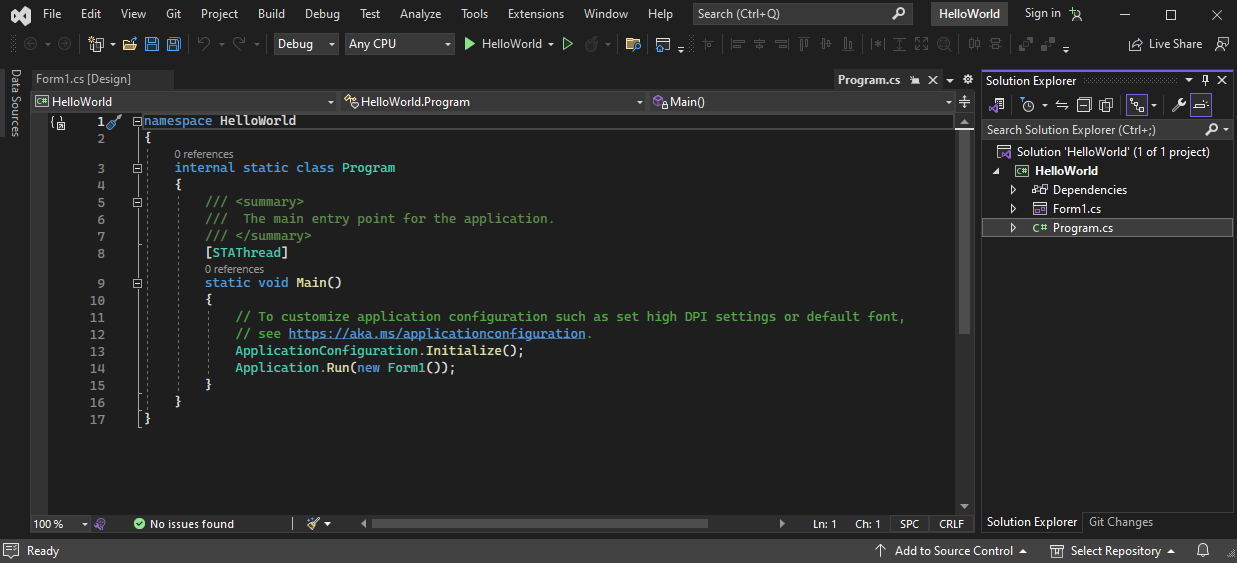
1. Open the Visual Studio solution
Open the solution for which yous want to create the install parcel.
2. Add an Advanced Installer Project to the solution
Once the Visual Studio solution is loaded:
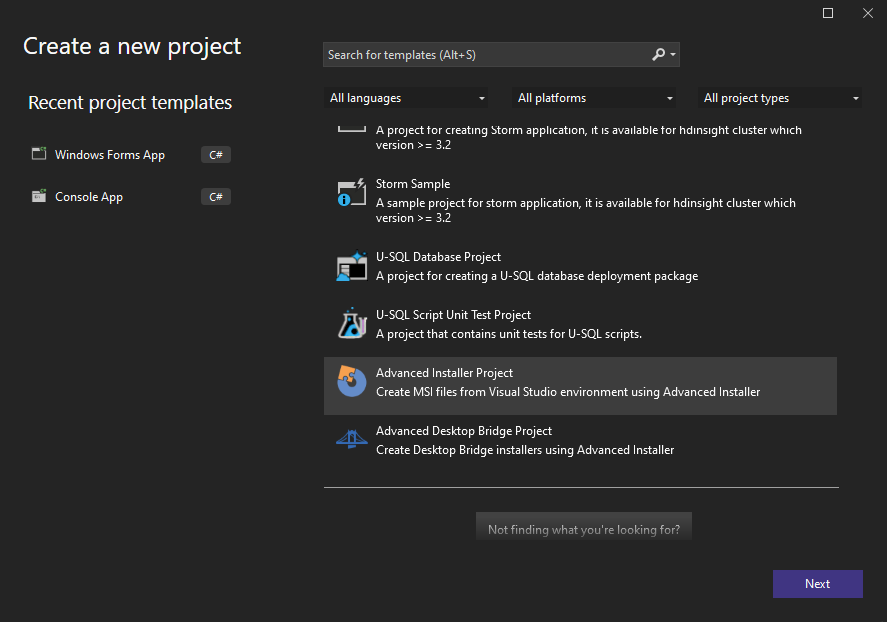
- From the "New Project" dialog select Advanced Installer Projection
- In the "Solution" field select Add to solution option
- In the "Proper noun" field y'all can write a name for your projection
- Press to add the projection to the solution
By default, when adding an Advanced Installer Project, the build output of the solution will not exist automatically added to the installer project, to do this you must:
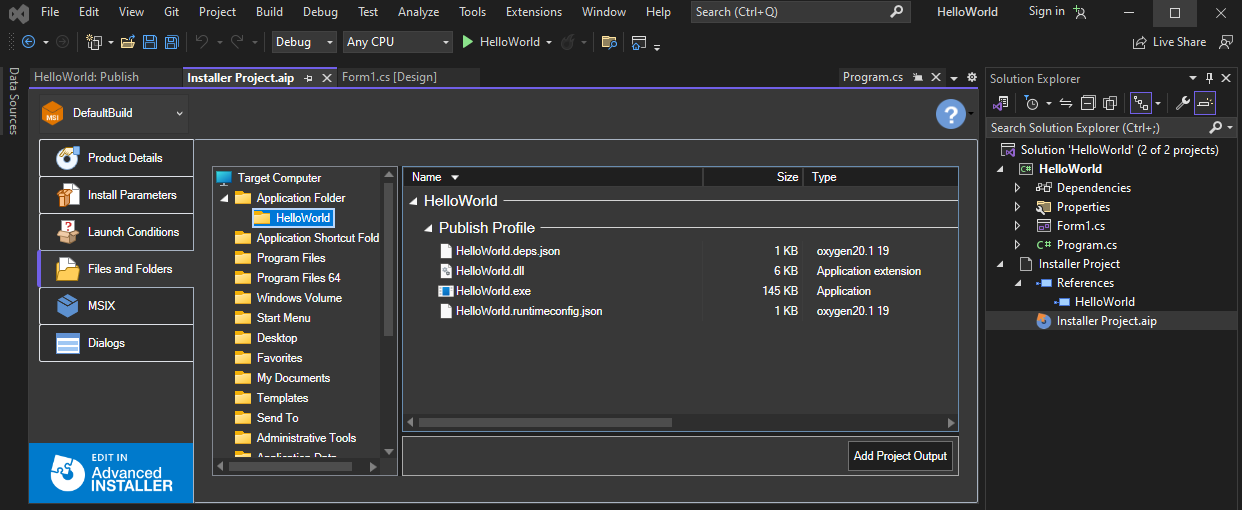
- Go to the "Files and Folders" section of the Installer Project
- Press "Add together Project Output" button
- Select the "Primary Output" and "References"
- Press
The output of each project contained by the solution is automatically synchronized in the Advanced Installer project.
Following these steps, Advanced Installer Extension for Visual Studio adds in the installer projection all application references except the Microsoft .NET assemblies.
3. Create the first install package
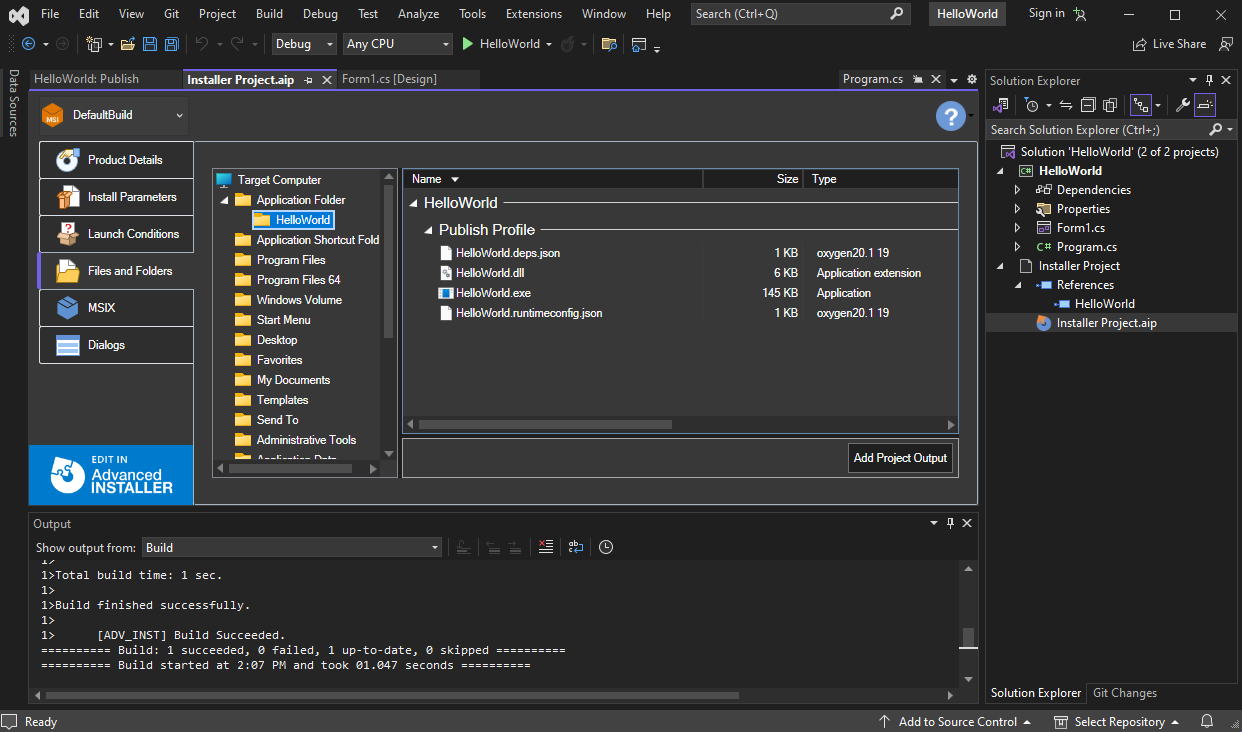
In Visual Studio select "Build" > "Build Solution" option to start the build.
After the build is completed successfully, it will create 2 primary files: HelloWorld.exe which is the output from the C# project and Installer Project.msi which is the installation package.
4. Edit the installer projection
Using the Advanced Installer Project viewer, yous can edit basic information about your installer like Production Details, Launch Weather, Install Parameters, and much more..
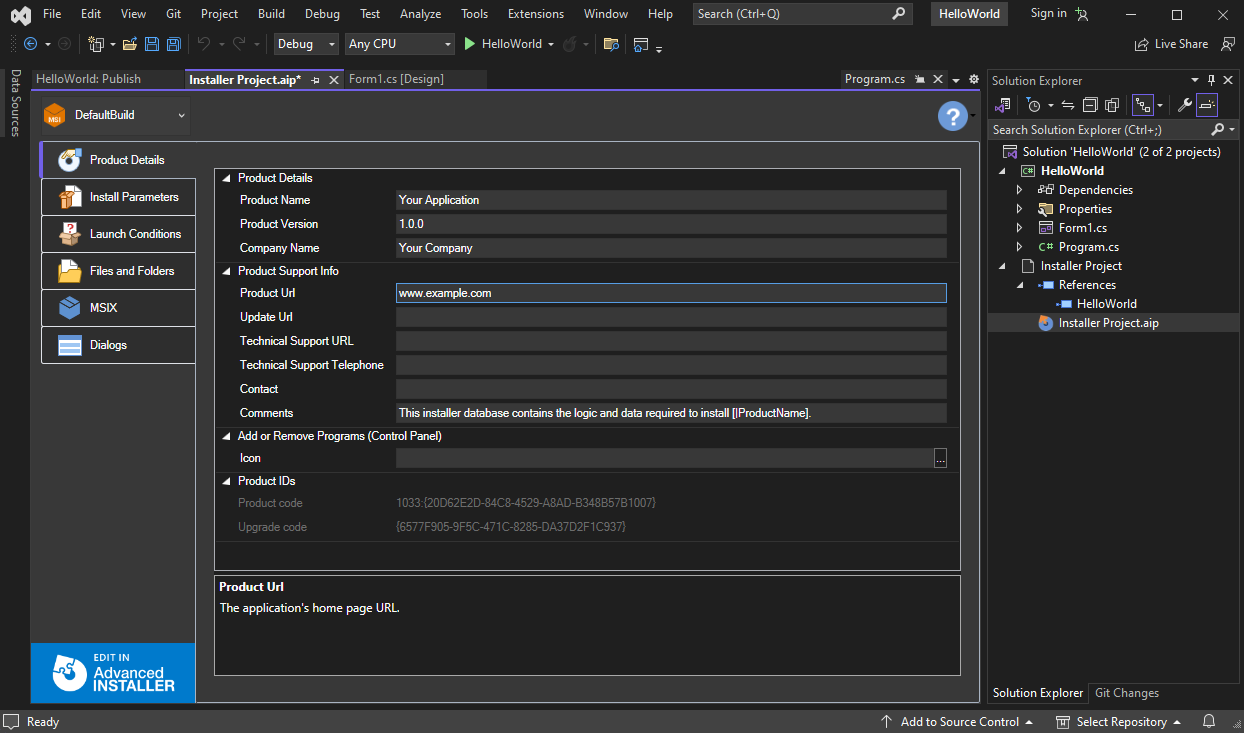
Let's suppose nosotros have an Enterprise edition of Advanced Installer. By default, the installer project volition be created based on a Freeware license. Since we want to employ features from the Enterprise edition, like selecting a theme for the installation dialogs, we volition need to upgrade our projection blazon:
- Press the push to open up your installer project in Advanced Installer
- From the "Project" menu select "Options..."
- Navigate to the Project Blazon Tab and select Enterprise
- Press the button
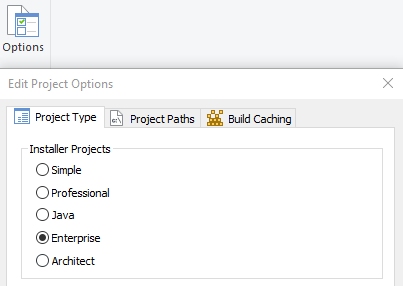
Now, that we have an Enterprise project we have total access to all the available Advanced Installer Enterprise features.
- Go to Themes Page
- From the correct view select the desired theme and variation for your installer dialogs
- Save the project and go out Advanced Installer
Visual Studio will ask y'all if you want to reload the installer project since it was modified. Press the button.
5. Add together another Visual Studio Project to the solution
If an Advanced Installer Project is added to a solution, information technology volition automatically import the build output and all useful information related to the projects from the solution. If later, the existing projects are modified, or some other project is added to the solution the import operation must be redone.
Allow'due south add together a new Visual Studio project to the solution:
- From the "New Project" dialog in Visual Studio select "Visual C#" > "WPF App"
- In the "Solution" field select Add together to solution option
- Press the push. The new project will be added to the solution
- Rebuild the solution
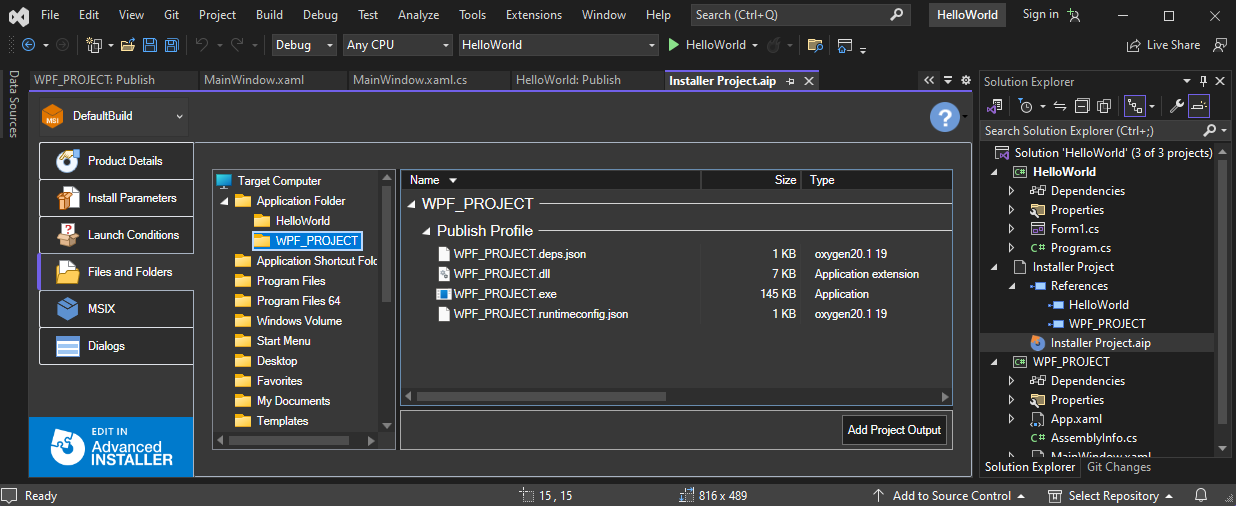
six. Create the concluding install package
Include the 2nd project in the installer package:
- Select the Installer Project.aip file from the "Solution Explorer"
- Cheque that both projects output builds are included in the installer packet from the "Files and Folders" page
- Rebuild the solution
- Test the new installation bundle
The newly created installer volition comprise all the projects from the solution.
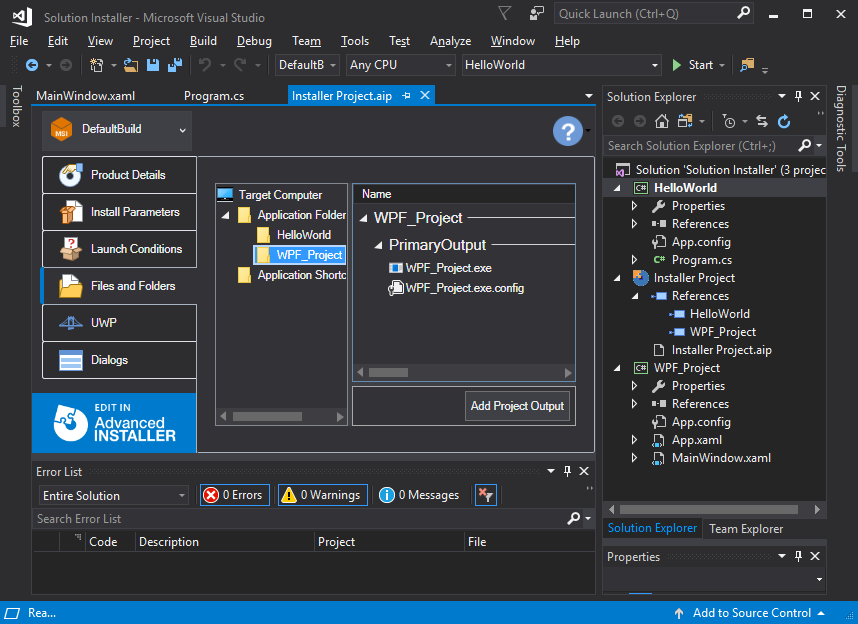
7. Automatically import .VDPROJ files (optional)
If yous have solutions that contain old Visual Studio Deployment projects (.vdproj) you lot tin can automatically convert them to an Avant-garde Installer project and have it included in your solution, replacing the sometime VDPROJ. Just open the solution in Visual Studio, with our Advanced Installer VS extension installed, and VS volition prompt you to accept the conversion from VDPROJ to AIPROJ (Advanced Installer VS projection).
The new project Advanced Installer projection will contain all the resources from the old VDPROJ. If you lot want to customize it more than simply utilize the "Edit in Avant-garde Installer" button, available when you open the .aip file in Visual Studio.
eight. Add together project output of a .NET cadre project to your setup projection (optional)
If you have a .NET Cadre project in your Visual Studio solution, hither is how to include its output in the setup project:
Go to the "Files and Folders" section of the Installer Project, click on "Add Project Output" and cheque "Publish Contour" pick:
If there is no publish profile previusly created, you lot will exist asked to create i:
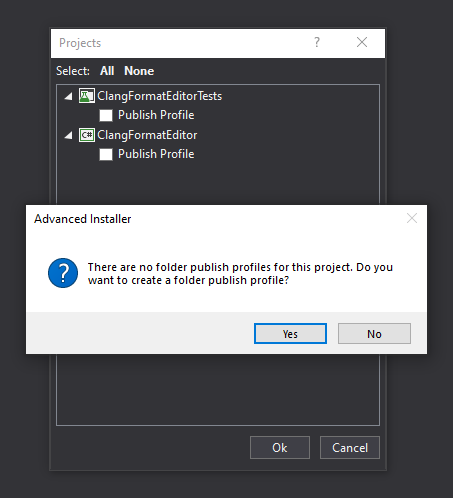
Next, you will exist asked where practice yous desire to publish:
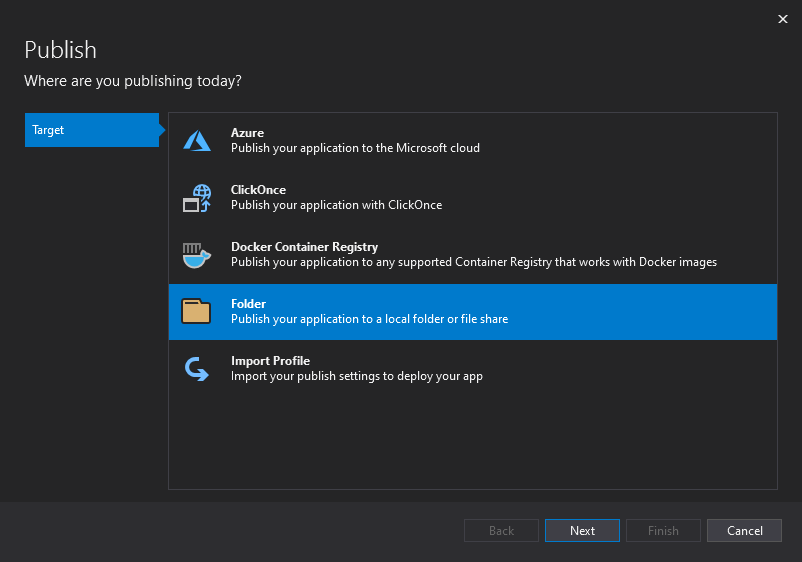
Choose "Folder" option in guild to publish your application to a local binder.
So, provide the path to the publish folder:
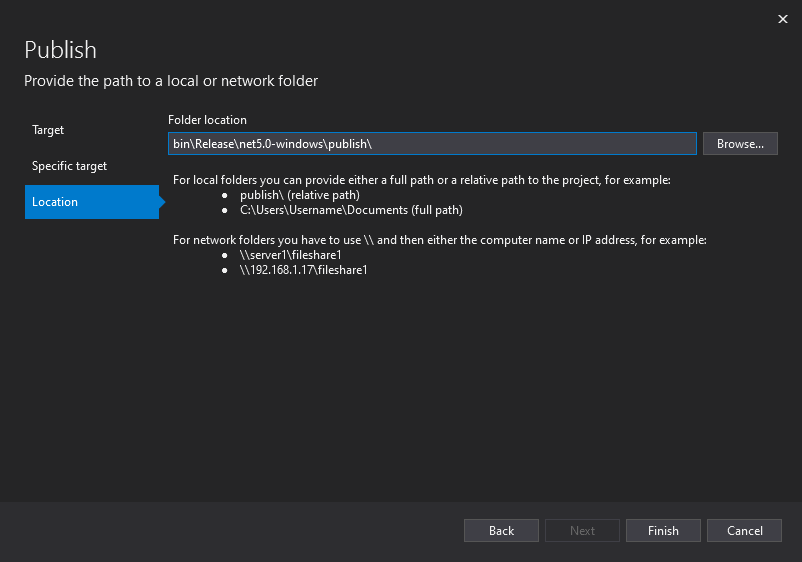
After publishing the awarding, become back to "Add Project Output" and select the newly created publish profile:
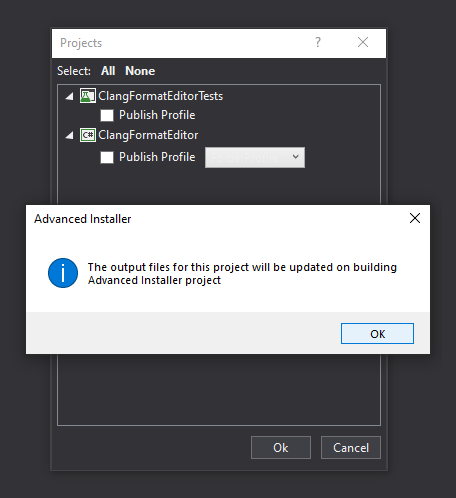
The concluding step is to build the Advanced Installer project in order to update the output files.
9. Video tutorial

Source: https://www.advancedinstaller.com/user-guide/tutorial-ai-ext-vs.html
Posted by: lukequeleandon1970.blogspot.com
0 Response to "How To Create An Installer In Java"
Post a Comment